

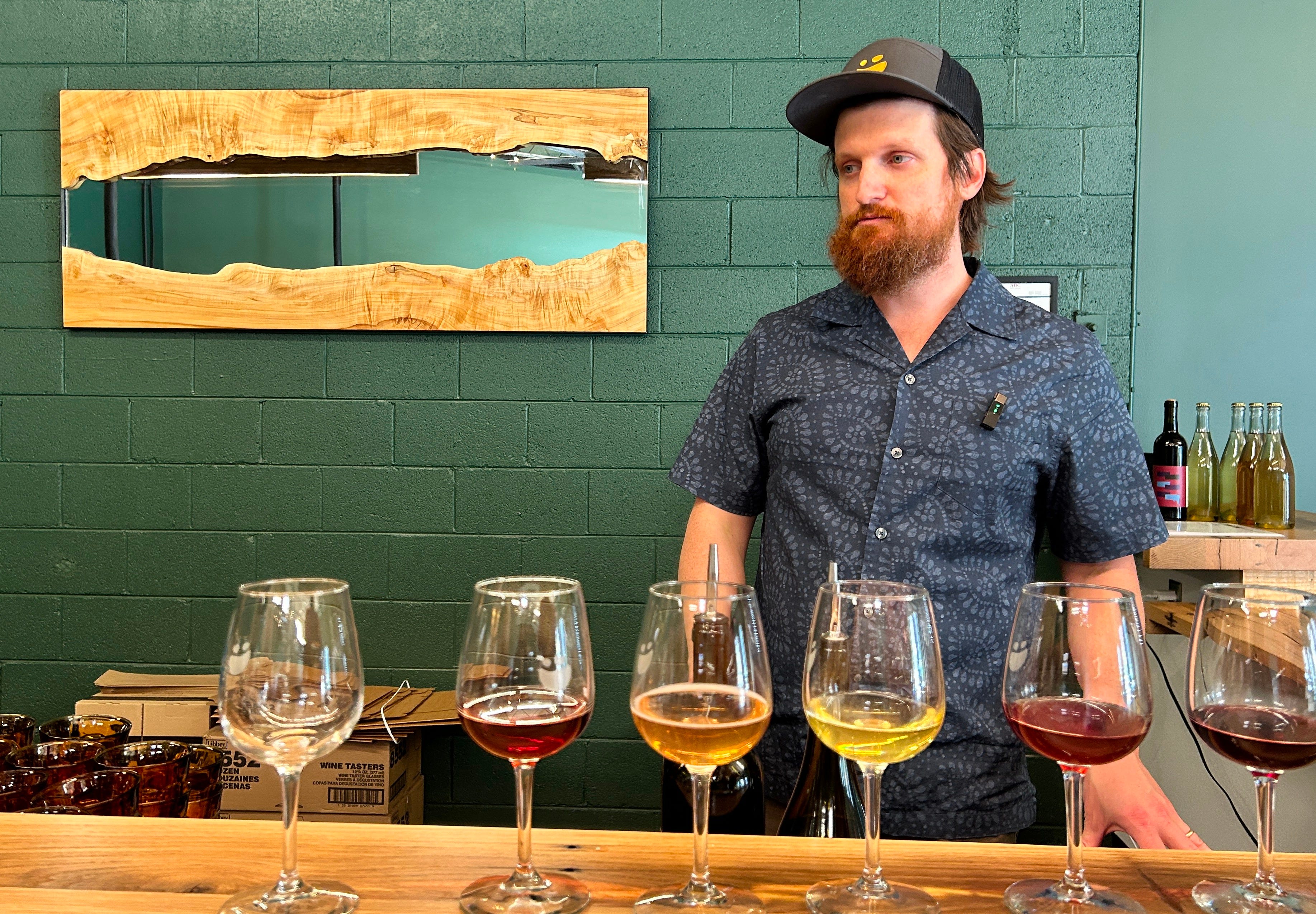
Originally published in Screw it Wine Issue 12, this updated story revisits our conversation with the team behind euda wine, a North Carolina wine project that felt worth watching from the beginning. A couple of years—and one very disruptive hurricane—later, we’re resharing the story with a fresh look at where euda stands now and why it remains one of the state’s more compelling wine projects.
There’s a certain type of person who looks at an emerging wine region and sees opportunity instead of risk. Michael McGeary is one of those people.
Before Old Fort, before euda, before the quiet confidence of letting wines “make themselves,” there was Aspen. Restaurants. Late nights. A manager who pushed wine education not as a luxury, but as a necessity. That’s where McGeary’s path started—on the floor, selling bottles, learning fast, and eventually chasing a sommelier certification.
It didn’t take long before that wasn’t enough.
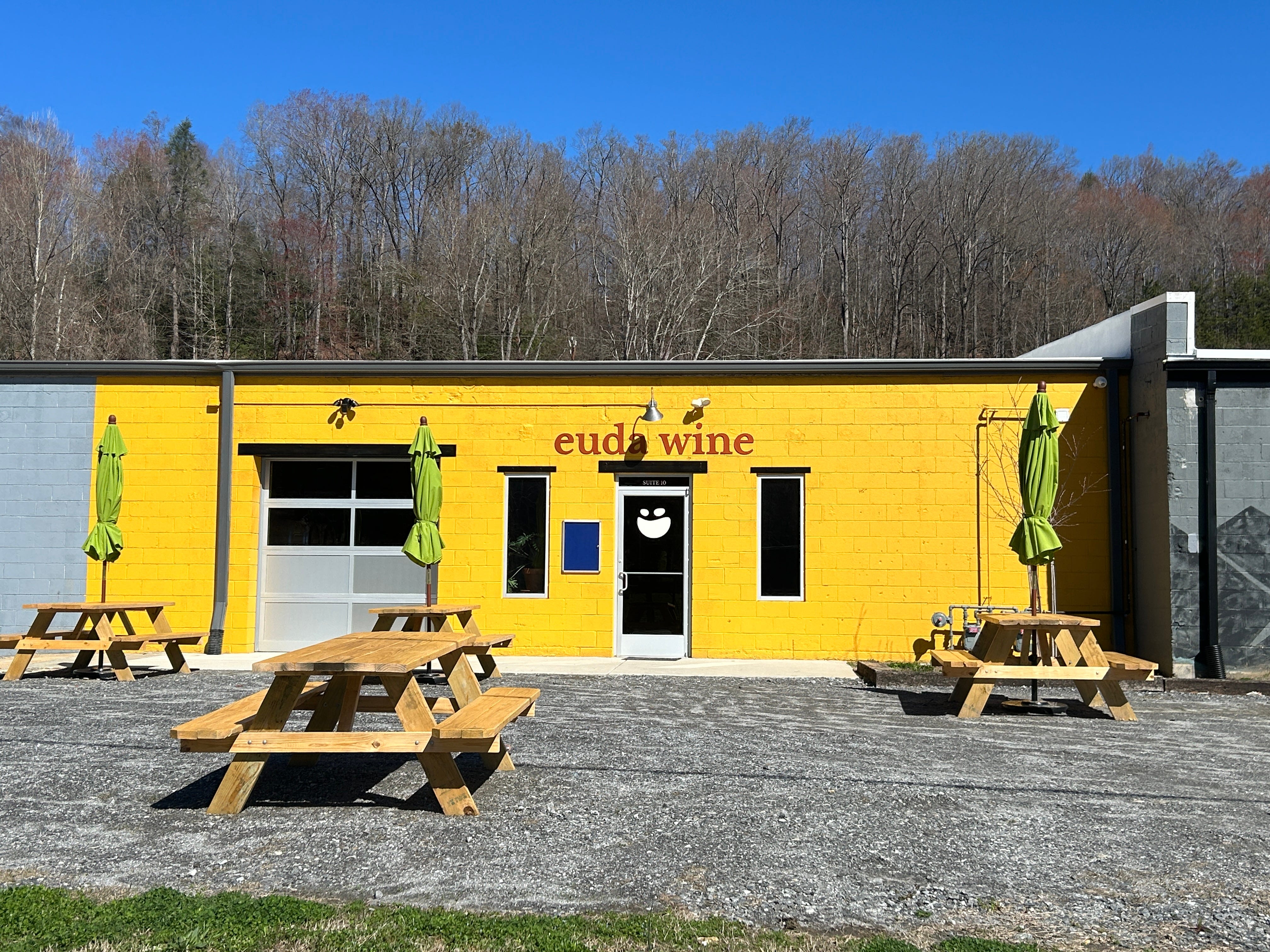
A chance conversation with a Napa salesman turned into something bigger. Two weeks later, McGeary was in California, in the middle of a harvest, learning the side of wine that doesn’t come with a corkscrew and a polished spiel. Bottling lines, long days, physical work—the kind of education that strips away any romantic illusions and replaces them with something more durable.
“It was unique to work and create something you can put in someone’s hand at the end of the day,” he said.
That realization stuck.
Over the next several years, McGeary built what you could call a global résumé without the ego that usually comes with it. Napa became his home base, but he also had stints in New Zealand and South Africa, followed by formal education in Switzerland, where he earned his master’s. Chile added another harvest. Virginia added perspective. Maryland added leadership.
Each stop sharpened the same idea: great wine doesn’t need to be overworked.
Building Something Where Others Wouldn’t
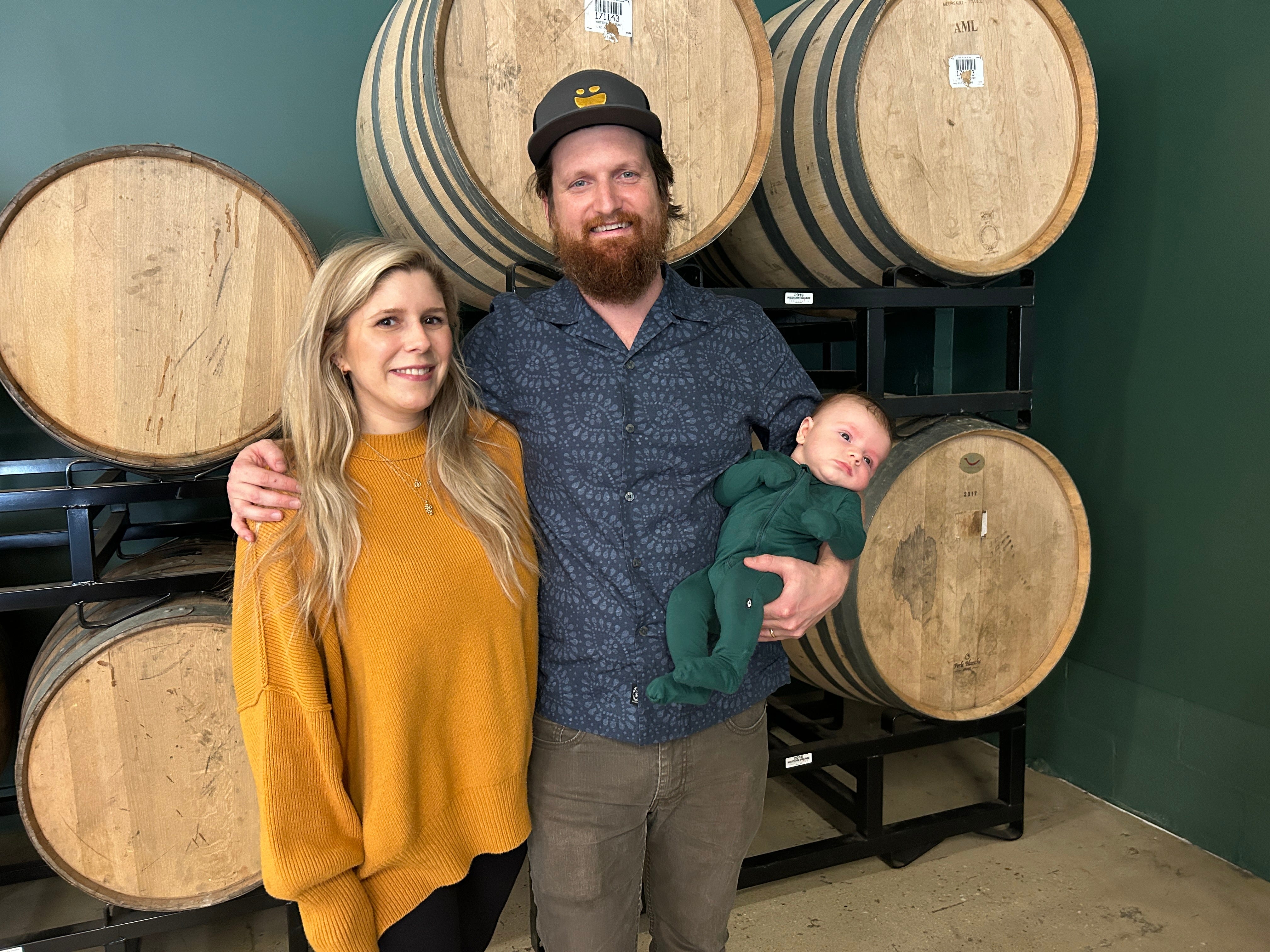
By the time McGeary and his wife Abi made the move to North Carolina in 2022, they weren’t chasing prestige—they were chasing possibility.
Abi, whose background spans social work and therapy, became an integral part of the business, balancing a full-time career while helping shape euda’s events, community presence, and overall feel. Together, they built the winery around a concept that’s easy to say and harder to execute: eudaimonia—a life well lived.
That philosophy shows up in the way they approach wine, and maybe more importantly, in the way they approach people.
North Carolina wasn’t the obvious choice. Even now, it still isn’t for many in the industry.
“When I left California for Virginia, people thought I was crazy,” McGeary said. “Then leaving Virginia for North Carolina, it was the same thing—‘They don’t know how to make wine there.’”
That doubt is part of the appeal.
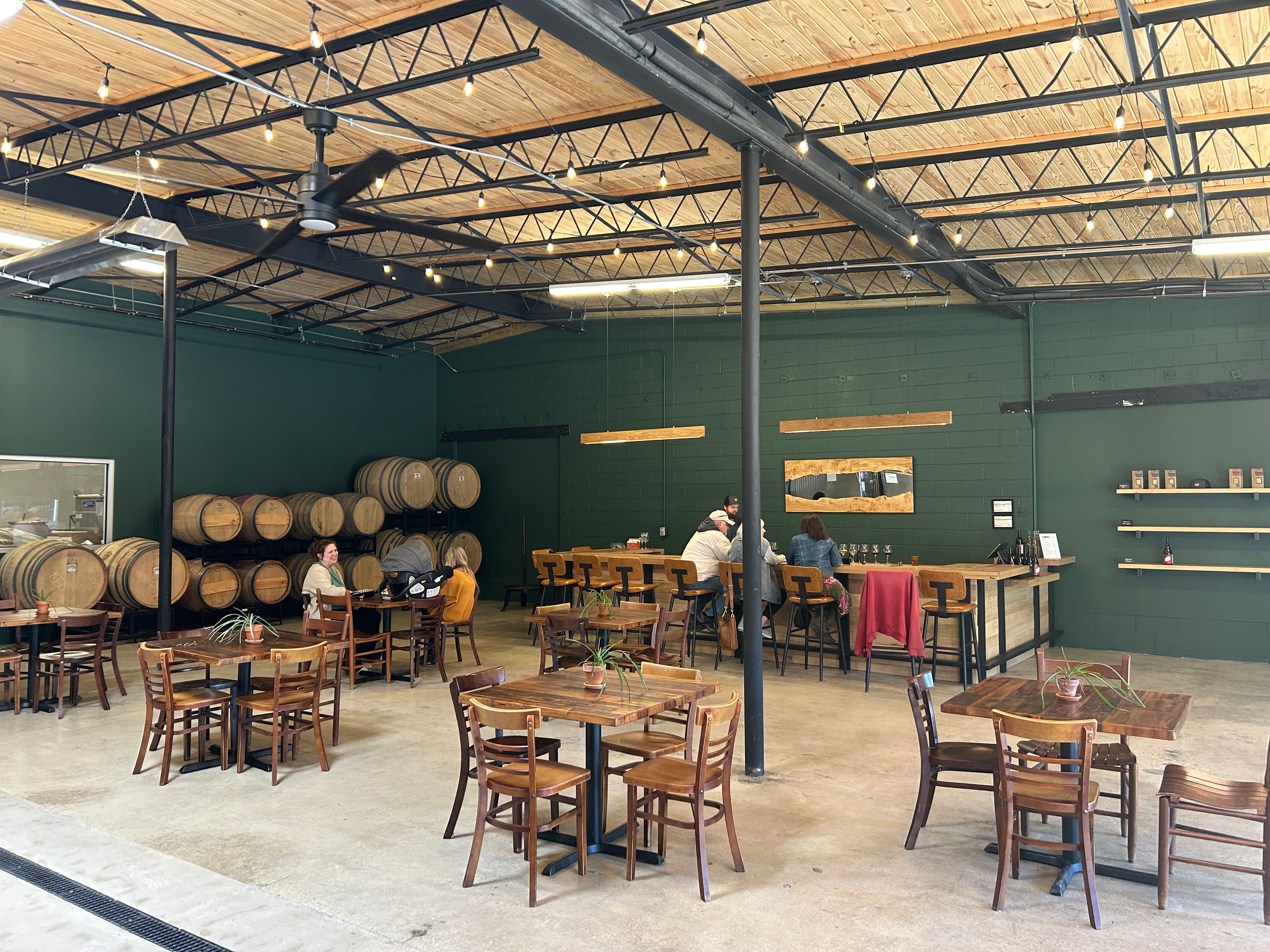
Rather than stepping into an established region with rigid expectations, euda landed in Old Fort—a small town just outside Asheville, close enough to draw visitors but far enough to feel like its own thing. A place still figuring itself out, much like North Carolina wine as a whole.
A Minimalist Approach in a Maximum Effort Industry
If there’s a defining thread in euda’s winemaking, it’s restraint.
Old World influence shows up not in marketing language, but in practice. Fermentations are spontaneous. Additions are minimal. Intervention is kept to a level that would make some modern producers uncomfortable.
The idea isn’t to do nothing—it’s to do less, intentionally.
“All our fermentations are spontaneous,” McGeary explained. “We try to do the least amount of stuff we can in the winery.”
That philosophy extends to sourcing as well. While euda doesn’t yet farm its own vineyard, the focus has been on building relationships with growers, primarily in the Yadkin Valley, while exploring more local opportunities as they grow.
The long-term goal is clear: control the fruit, control the farming, control the outcome.
The short-term reality is equally clear: vineyards are expensive, and patience is part of the process.
The Wines—and the Direction
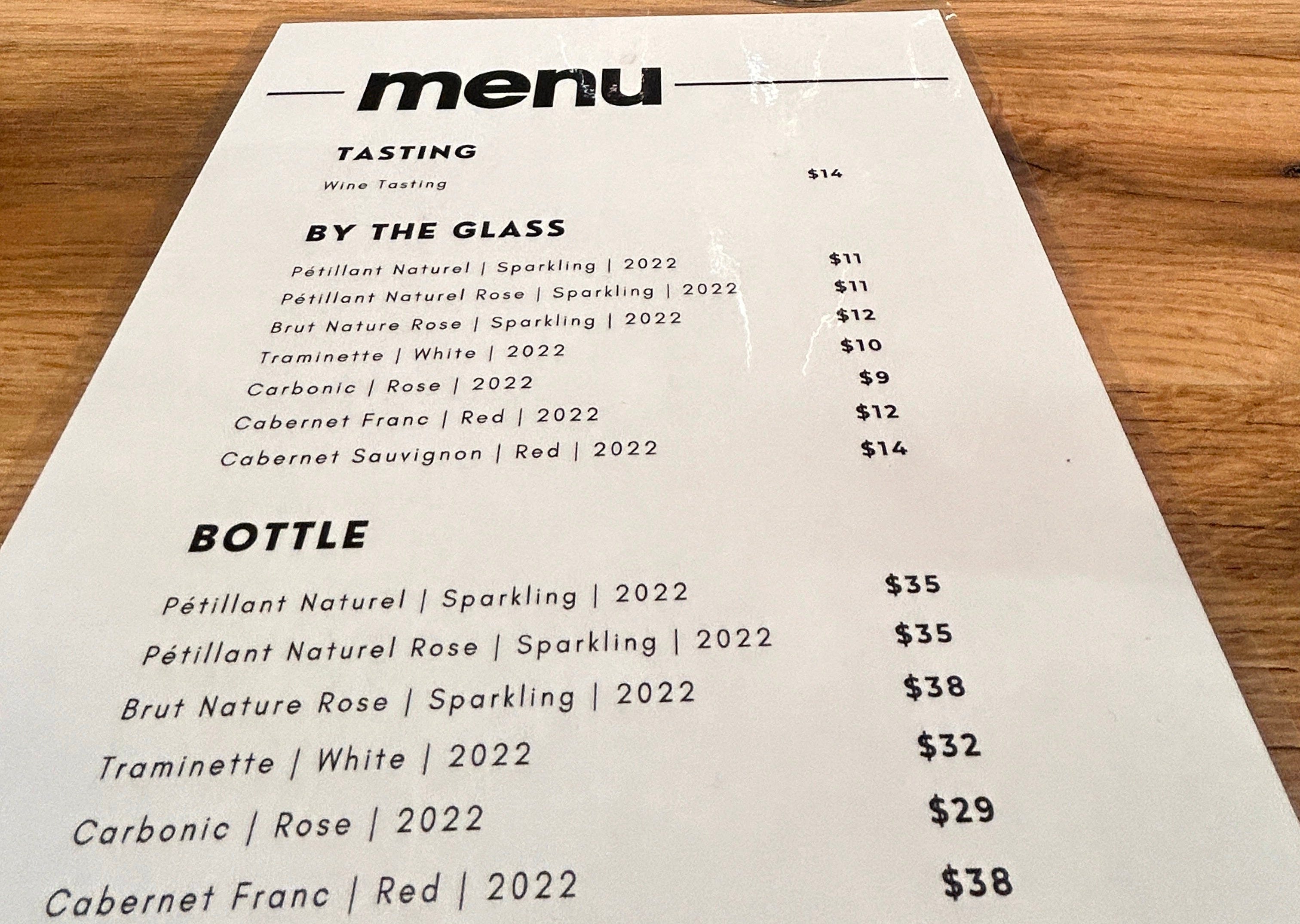
From the start, euda positioned itself with a lineup that leans both ambitious and approachable: sparkling wines, structured reds, fresh whites, and a carbonic red that hints at a willingness to experiment without overcomplicating things.
Early releases included a mix of styles designed to introduce the brand, with plans to expand into varietals like Sauvignon Blanc, Riesling, and a Merlot-based rosé.
It’s not about chasing trends. It’s about building a portfolio that reflects both place and philosophy.
After the Storm
Since our original conversation, Western North Carolina has faced its share of challenges, including a hurricane that impacted communities across the region. Old Fort, like many small towns nearby, felt those effects—disruptions, recovery efforts, and the kind of uncertainty that tests young businesses.
For a winery like euda, still in its early stages, moments like that can either stall momentum or sharpen focus.
In many ways, it’s done the latter.
Recovery in towns like Old Fort isn’t just about infrastructure—it’s about community. Businesses supporting each other. Locals are showing up. Visitors returning. And in that environment, places like euda play a role that goes beyond wine.
They become gathering spaces.
They become proof that starting something from scratch—even in a place others overlook—is still worth it.
Why euda Still Matters
There’s a temptation to judge wineries too early. To look at a new label and ask if it’s “there yet.”
That’s missing the point.
euda isn’t trying to drop into North Carolina as a finished product. It’s building something in real time—shaped by experience, grounded in philosophy, and influenced by a region still defining itself.
And that’s exactly why it works.
Because if North Carolina wine is still in its build phase, then euda fits right in—not as an outlier, but as part of the foundation.